A few years ago, the phrase “artificial intelligence writes code” sounded like the plot of a science fiction story. Today it is part of an ordinary working day. The editor suggests not a single word but several lines at once. You can describe a task in plain language and get a nearly finished draft of a solution. Tools have appeared that analyze a project on their own and point out where fixes are needed.
A question comes up almost at once, one with an understandable note of anxiety: what, then, is left for the human being? In short: almost everything that truly matters.
What AI Has Taken On
A large part of a developer’s day is not creative work but repetition. The same kind of code for yet another form. Looking up a command that was used a month ago and already forgotten. Setting up configuration files. Tests that are tedious to write but impossible to skip. This is exactly the layer that AI has removed. Not the interesting part of the work, but the part that stood between the developer and the interesting part.
Earlier, hours of routine lay between an idea and a working prototype. Now there is less of it, and you can reach the heart of the matter faster. The point is not that “the machine writes the program for you.” It is that the specialist no longer spends time on what they already know how to do, but used to do by hand. Attention has shifted from “how do I write this” to “did it come out right,” and that shift is in the right direction.
How This Is Used in Practice
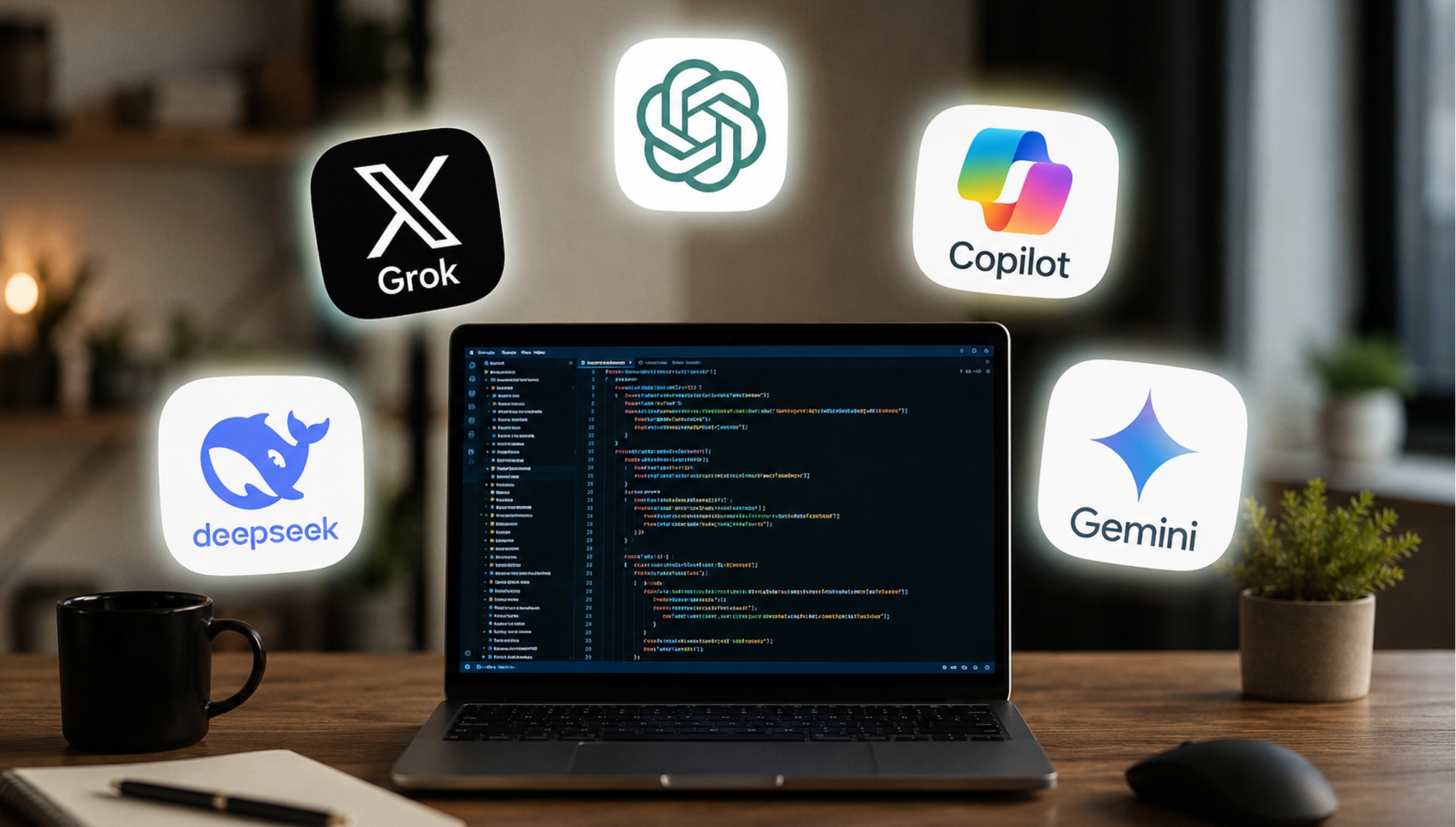
A few examples, given not as a recommendation but as an illustration. The most familiar format is smart autocompletion in the editor: the developer starts typing, and the tool proposes a continuation (this is how GitHub Copilot works). There are editors built around AI, such as Cursor, where you can describe in words what to change in part of the project, and the edits are applied in several places at once. There are agent tools such as Claude Code: you describe the whole task, and they decide on their own which files to touch and then check the result. And ordinary assistants such as ChatGPT or Claude are often used simply to talk a task through, since part of the solution arrives the moment the question is put into clear language.
Specific names will change over time. What matters is not the names but the fact that the bar for what one specialist can accomplish has risen noticeably.
What AI Cannot Do
AI answers the question “how do I do this” well, and it is almost useless on “what is worth doing at all.” It will offer several options, but which one is right depends on circumstances unknown to it: the deadlines, the makeup of the team, code written years ago, the behavior of the system under real load. Understanding the real task behind the client’s words, deciding what should not be done, taking responsibility for the result: all of this still rests with the human. A telling example: AI often proposes a solution straight from the textbook, while the team knows that a spike in load is coming and how the project is staffed, and therefore that the formally correct option will cause problems here. The tool does not have that context.
It also matters that the answer from AI has to be read and understood. The tool phrases things confidently, and with the same confidence, it sometimes gets them wrong. So value shifts from the speed of writing toward the ability to quickly make sense of code and to say, with good reason, “no, this does not fit.” Code review turns from a formality into the main part of the work.
What This Means for the Customer
For the people who pay for software, this shift is good news. When routine stops eating up the day, more of the budget goes toward solving the actual problem instead of producing boilerplate. An idea reaches a working prototype sooner, so the customer can see something real, react to it, and change course before a great deal of money has been spent. Teams iterate faster and deliver sooner.
What does not change is just as valuable. An experienced person still reads every result, still asks whether it fits the customer’s real situation, and still stands behind the outcome. So the customer gets two things at once: the speed of the new tools and the safeguard of human judgment. Fast delivery counts for little if the product solves the wrong problem, and that is exactly the part that stays in human hands.
Who Remains the Author
A comparison with a power tool is apt. The cordless screwdriver did not push carpenters out of work. It raised the bar for what one person can build in a day. But what to build, to which design, and how soundly it turns out is still the carpenter’s decision.
The same is true here. The most valuable skill is no longer typing code quickly. It is understanding problems clearly, making sound technical decisions, and judging whether a solution actually serves the people who will use it. AI accelerates implementation, but it does not replace judgment.
That judgment is what turns working code into the right product, and it is what the customer is ultimately paying for. The tools will keep getting faster and more capable. The questions that decide whether a project succeeds will keep belonging to people: what to build, why, for whom, and what happens when it meets the real world.
Routine can be delegated. Authorship cannot.