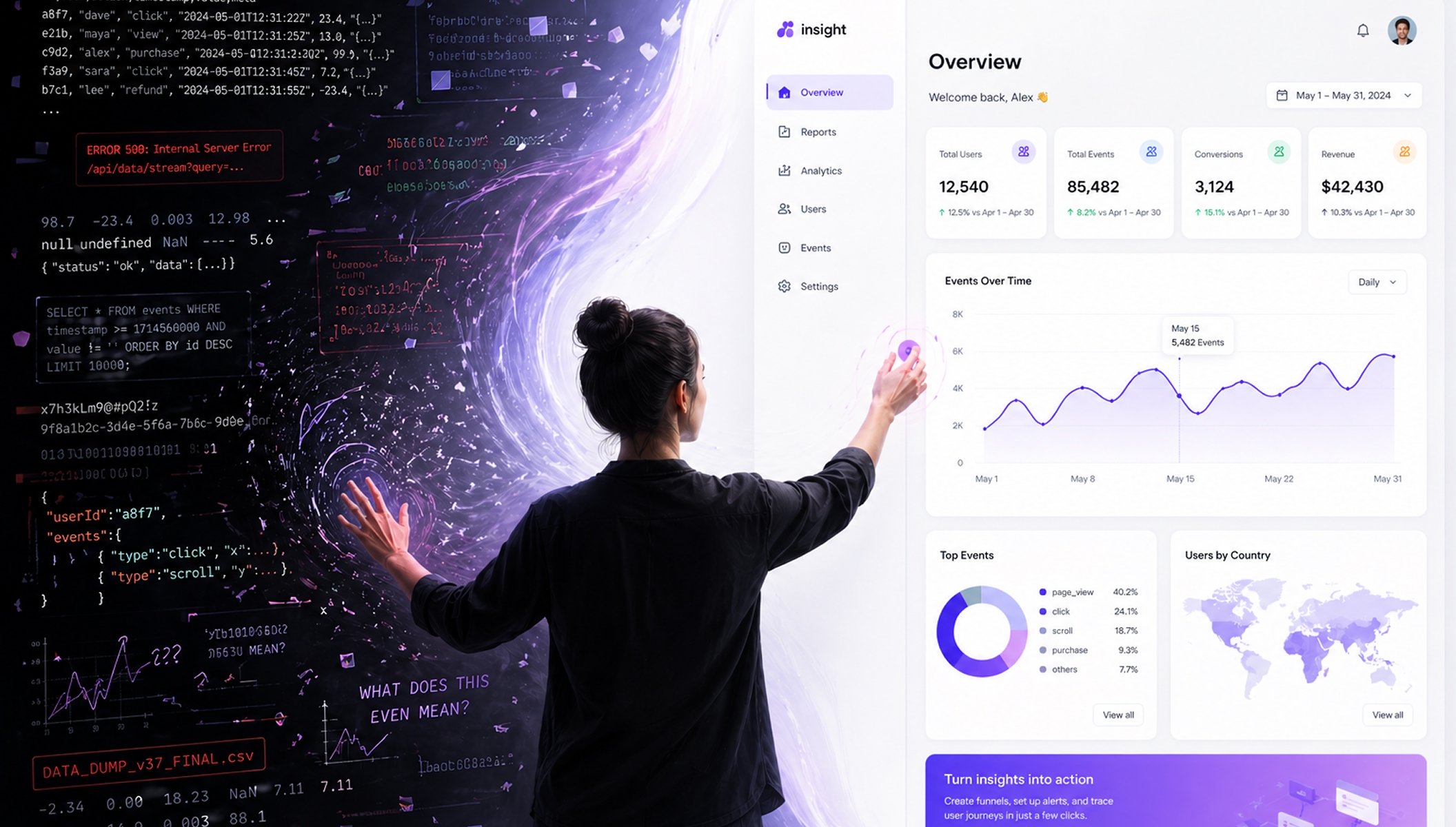
For a long time, discussions around design in digital products have oscillated between two poles: aesthetics and usability. Visual trends would evolve, tools would change, and new paradigms would emerge.
However, the core principles of good design have remained remarkably stable.
Clarity, predictability, and alignment with user needs have been part of established practices like Human-Centered Design and Lean UX for decades.
What has changed is not the principles themselves, but the environment in which they operate.
At scale, with higher competition, faster delivery cycles, and full visibility into product metrics, these principles are no longer optional. They are enforced.
From Trend-Driven Design to Product Design Discipline
It is important to distinguish between two different contexts often grouped under the same term “design”:
- Showcase / trend-driven design, often visible on platforms like Dribbble or Behance
- Production product design, where decisions are constrained by real users, data, and business goals
Most high-performing companies have long operated in the second category.
The shift we observe today is not that design suddenly became “business-oriented”, but that this mindset is now becoming the default expectation across the industry.
Beyond the False Tradeoff: Aesthetics and Function
A common simplification in design discussions is the perceived tradeoff between how a product looks and how well it works. In practice, the most successful products demonstrate the opposite.
Leading companies succeed not by choosing between aesthetics and usability, but by integrating both.
Aesthetics are not decoration. They influence:
- user trust,
- perceived performance,
- emotional engagement,
- brand differentiation.
Well-executed visual design reduces friction just as much as well-structured flows do.
AI Is Expanding, Not Replacing
The rise of AI introduces new variables into interface design, but it does not invalidate existing practices. Traditional systems were largely deterministic. AI-driven systems introduce variability.
This requires designers to think beyond predefined states and consider:
- probabilistic outputs,
- evolving system responses,
- partially structured interactions.
Rather than replacing UI, this expands it.
Interfaces increasingly combine:
- structured controls,
- adaptive content,
- conversational elements.
The result is not the disappearance of design systems, but their evolution into more flexible and context-aware frameworks.
Design Systems as a Scaling Mechanism
As products and teams grow, consistency becomes a key challenge. Design systems address this not only at the visual level, but also at the level of behavior and decision-making.
They provide:
- reusable components,
- shared interaction patterns,
- alignment between design and engineering.
This is not a new concept. What is changing is its importance.
In complex environments, a design system is less a convenience and more a prerequisite for scalability.
Rethinking “Vibe Design”
Recent years have seen the rise of more expressive, visually distinctive interfaces – sometimes referred to as “vibe design”. These approaches prioritize identity, emotion, and memorability. In practice, their effectiveness depends heavily on context.
They can:
- create strong differentiation in saturated markets,
- increase user engagement,
- make products more recognizable.
At the same time, if not balanced carefully, they may introduce:
- unclear navigation,
- inconsistent interaction patterns,
- increased cognitive load.
The key is not to reject expressive design, but to integrate it responsibly within a usable structure. The most effective products treat visual identity as a layer that enhances clarity, rather than competing with it.
Performance as a Shared Responsibility
Performance has always been part of user experience, but today it is more visible and measurable than ever. Users interpret responsiveness as reliability. Delays, even small ones, can disrupt the flow of interaction and reduce trust.
Design decisions now routinely consider:
- perceived performance,
- feedback timing,
- loading strategies.
This requires tight collaboration between design and engineering, where experience and implementation are treated as a single system.
Design as Part of Product Strategy
In mature organizations, design is not a final step.
It plays a role in shaping:
- product direction,
- user flows,
- prioritization decisions.
Its impact is measurable:
- conversion rates,
- onboarding efficiency,
- retention,
- support costs.
This does not represent a new discovery, but a shift in how widely this approach is adopted.
Conclusion
Design trends will continue to evolve, as they always have. But the most important change is not visual. It is conceptual.
Design is moving away from decoration and toward decision-making. Away from static layouts and toward adaptive systems. Away from isolated screens and toward integrated product ecosystems.
Companies that recognize this shift and align design with real business outcomes will have a clear advantage.
Because in the end, design is not about how a product looks. It is about how effectively it works.